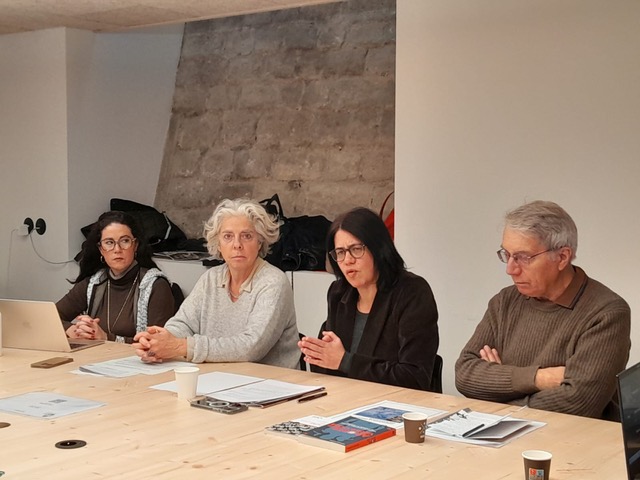
On 7 January, the French Committee of the IUCN held a press conference to mark the publication of a brochure on the One Health approach. The aim of this document is to make this approach understandable and operational, as it is too often only used in times of crisis. After three and a half years of collective work, the brochure conveys a key message: it is time to move from repair to prevention at source, by breaking down barriers between public policies.
This brochure explains why the urgency is no longer theoretical. More than six out of ten human infectious diseases are zoonotic, and around five new human diseases emerge each year, three of which are of animal origin: the proliferation of uncontrolled contact between humans, animals and ecosystems has become a structural mechanism, fuelled by deforestation, land use change, pollution, climate change and international trade in species. The trafficking of wild species, in particular, increases risky interactions and weakens ecosystems – a health prevention factor in its own right.
In this context, the IUCN’s role is specific and complementary: the IUCN is not a health organisation, and this is precisely what gives it added value in One Health. It provides analysis of ecological determinants, knowledge of territories, experience of protected areas and biodiversity governance, in order to anchor prevention in action on the causes. This approach is part of a political trajectory already underway within the Union: at the World Conservation Congress in Marseille (2021), a resolution explicitly linked One Health and pandemic prevention, emphasising the need to reduce risk factors linked to biodiversity loss and pressures on ecosystems.
The 2025 World Conservation Congress in Abu Dhabi reached a milestone with the adoption of two resolutions that make One Health a structural priority. One calls on the IUCN to build a robust One Health strategy, develop partnerships with the health sector, and produce technical resources and training tailored to local contexts. The other emphasises the shift from global to local: strengthening dialogue with the ‘Quadripartite’ (WHO, FAO, UNEP, OMSA), encouraging truly integrated financing, and inviting companies to integrate One Health into their social responsibility strategies. This framework requires a different approach to measuring public performance: less reactive, more preventive, and closer to the ground.
Finally, this publication comes a few months before the One Health International Summit to be held in Lyon on 7 April 2026, which could shift One Health from the realm of intention to that of commitment. The aim of this brochure is to provide concrete keys and levers to achieve this, and to remind us that One Health is only worthwhile if it truly breaks down silos.


Comments are closed