At the 2025 World Conservation Congress in Abu Dhabi, we organised an event at the French Pavilion specifically dedicated to the involvement of local authorities within the IUCN. Four years after subnational governments were recognised as members of the IUCN at the Congress in Marseille, the objective was simple and very concrete: to strengthen their voice in our governance, enable other members of the Union to meet them, and open up avenues for cooperation that translate into action on the ground.
On this occasion, we reiterated the specific role of IUCN as the global reference union for conservation and the growing importance of local authorities’ involvement in our Union. The challenge is both strategic and methodological: urban biodiversity is one of the areas where the credibility of implementation is at stake, because it is where public policies, social practices, economic trade-offs… and acceptability directly converge.
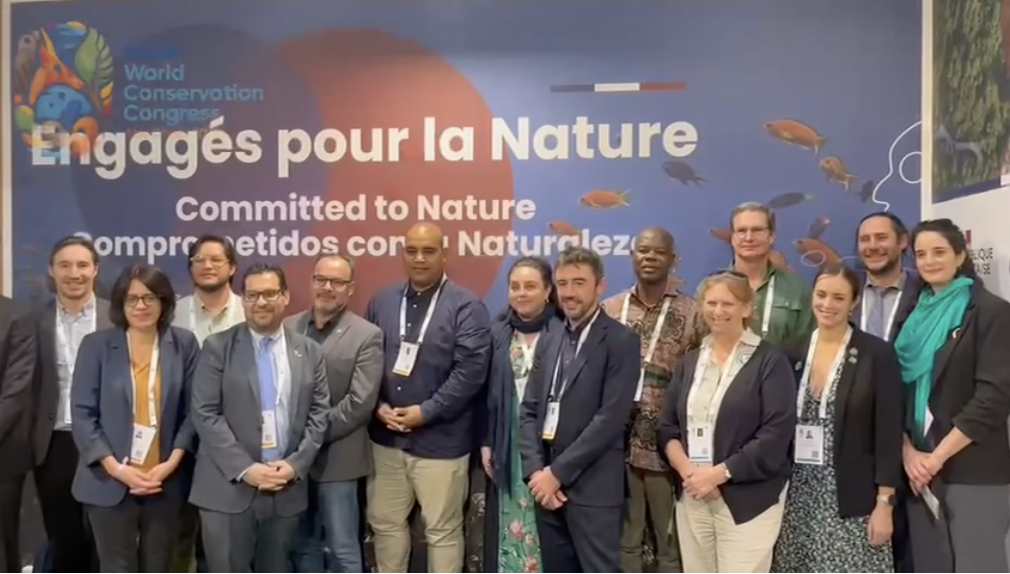
This discussion confirmed a key point: local authorities are often the level at which biodiversity policies are implemented, whether in terms of planning, natural space management, urban renaturation, climate adaptation or citizen mobilisation. Fully recognising their place within IUCN does not mean adding a new ‘category of stakeholders’; it means creating a major lever for translating international ambition into measurable and reproducible results.

We also discussed Resolution 8.121, sponsored by the Government of Quebec, ‘Strengthening the participation of subnational authorities within and through the Union,’ which was adopted by electronic vote prior to the Congress. This resolution sends an important political signal: conservation is not achieved solely through international negotiations, but through the ability to equip and connect those who work closest to the territories, by sharing frameworks for action, indicators, feedback, and alliances that transcend borders.


Comments are closed