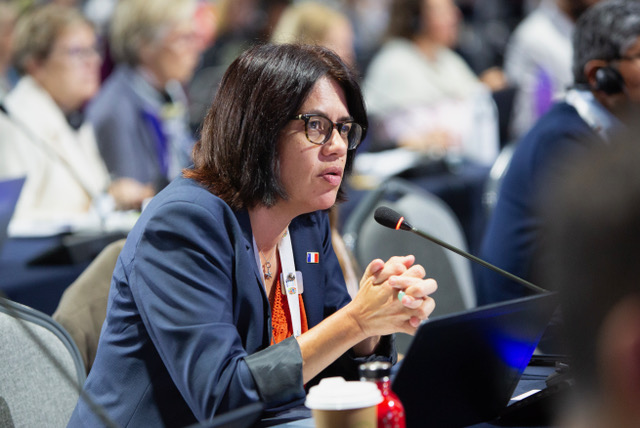
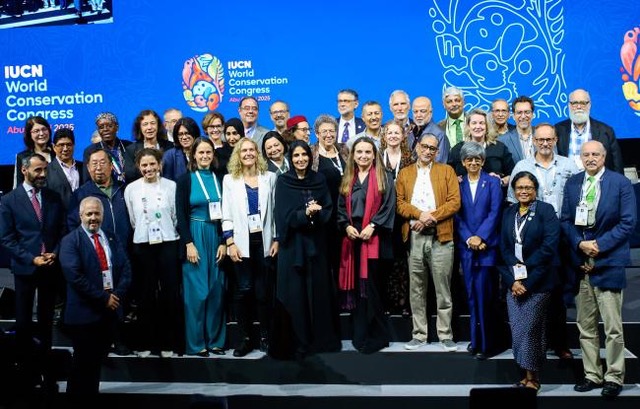
From 9 to 15 October 2025, more than 10,000 participants gathered in Abu Dhabi for the 8th IUCN World Conservation Congress, against a backdrop of accelerating biodiversity loss and weakening multilateralism. Beyond its unifying role, this Congress was a defining moment for the international agenda, continuing the momentum begun in Marseille in 2021, with only five years left to achieve the targets of the Global Biodiversity Framework, the Paris Agreement and the Sustainable Development Goals.
In terms of decision-making, 148 motions were adopted, including 8 new and urgent ones, and 38 were prepared with the support of members and experts from the French Committee, confirming France’s leading role in this mobilisation. The strength of the IUCN also lies in its co-decision mechanism: to be adopted, motions must obtain a majority in two separate chambers (States, including government agencies and local authorities, and NGOs, including organisations representing indigenous peoples), which gives these guidelines unique legitimacy and strategic scope for action.
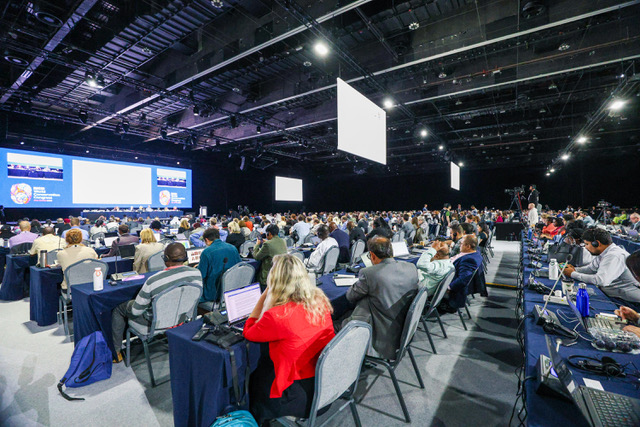
One lesson stood out clearly: putting nature back at the heart of global issues requires concrete coordination between agendas that are too often treated separately. The concept of the ‘nexus’ — biodiversity, water, food, health, climate — structured many of the discussions, highlighting the interconnectedness of crises and the need for cross-cutting responses.
The Congress highlighted the diversity of voices in conservation. For the first time, an Indigenous Peoples’ Summit was held ahead of the Congress, with a dedicated pavilion, and several motions reaffirmed the importance of indigenous languages, knowledge and cultural heritage for conservation. Local authorities have gained greater recognition since Marseille, with the adoption of motions put forward by local authorities and the highlighting of their actions, confirming that implementation largely takes place at the local level. The Congress also consolidated cross-cutting dynamics on gender equality, youth, philanthropy and business involvement, while strengthening the cohesion of the Francophone network with the Francophone Declaration of Abu Dhabi, signed by more than 60 organisations.
Finally, Abu Dhabi marks a strategic turning point with the adoption, for the first time, of a 20-year vision: by 2045, the world must recognise the value of nature as fundamental to well-being and as an asset to be preserved. This vision is broken down into areas of transformation and translated operationally into the Global Programme 2026–2029, a measurable roadmap for the next four years.
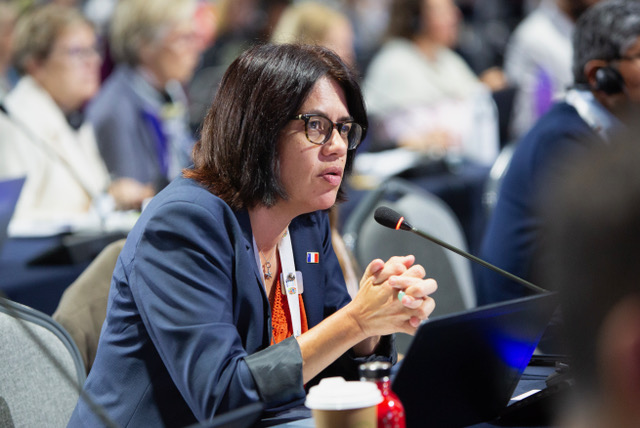
The Congress also renewed its governance: President Razan Al Mubarak was re-elected, and I had the honour of being re-elected as Global Councillor representing Western Europe. This re-election was entrusted to me with a particularly strong mandate: 789 votes, or 71.53% of the vote. Beyond the result itself, what stands out for me is what it reflects: a collective, patient effort built over time, and stronger ties within the Union for the 2025–2029 term.


Comments are closed