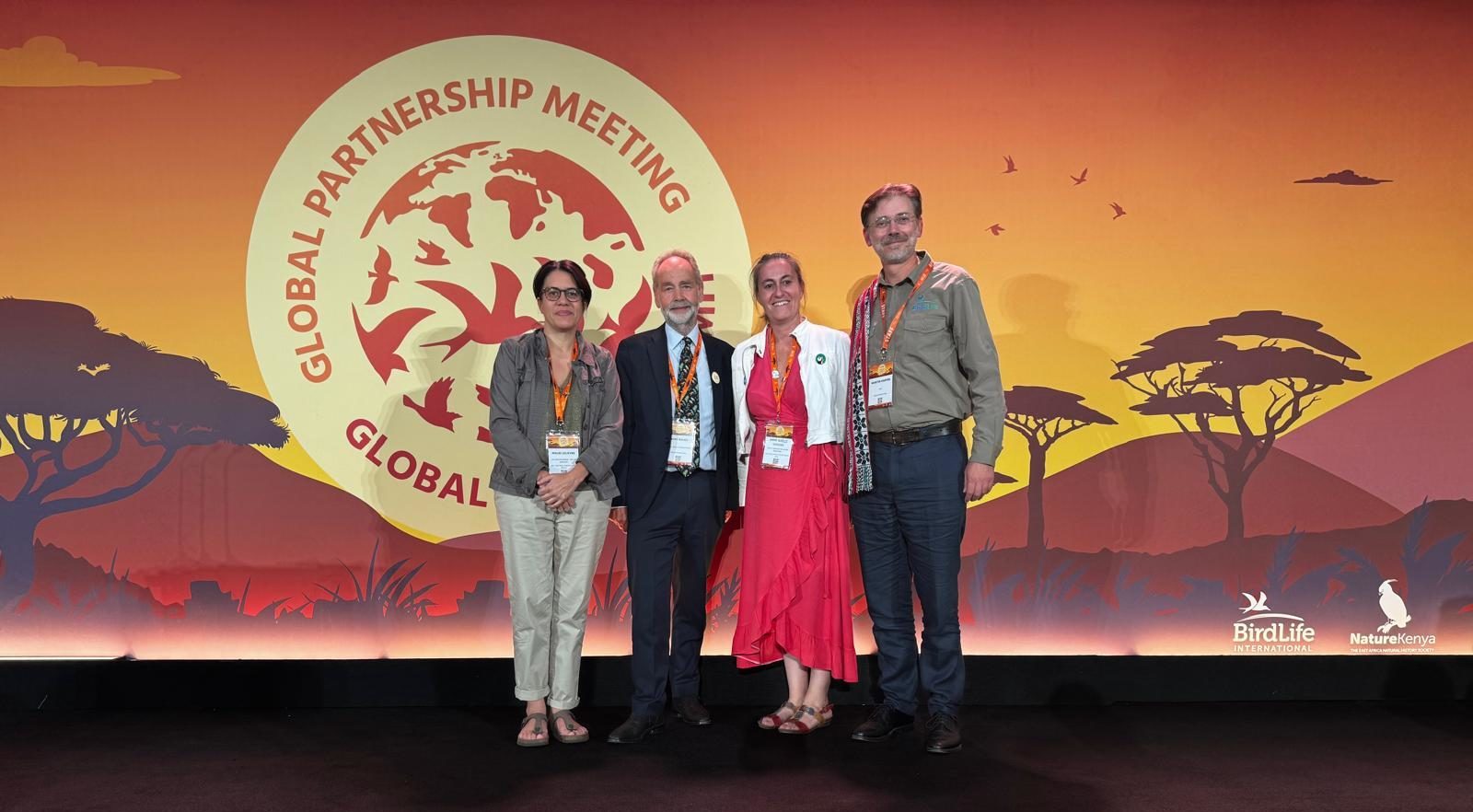
From 7 to 11 September, the BirdLife International World Congress took place in Nairobi, Kenya. It was an event rich in discussions, meetings and reflections on an issue that unites us all: better protecting birds and, through them, global biodiversity and ecosystems.
BirdLife International: a global network working for birds
BirdLife International is a global network of organisations working together to protect birds and their habitats around the world. Its work is particularly important because birds are key indicators of the health of our environment: their decline can reveal wider problems such as pollution, habitat destruction and climate change.
Today, around one in eight bird species is threatened with extinction. BirdLife therefore plays a vital role not only in their conservation but also in assessing the status of bird populations. In collaboration with the IUCN, BirdLife coordinates, in particular, the assessment of the risk of extinction for all bird species as part of the IUCN Red List. Together, these organisations thus help to better identify threatened species and guide conservation efforts at an international level.
Quatre jours d’échanges et de coopération
During this congress, I participated in the Global Partnership Meeting as a representative of the LPO, the French partner of BirdLife International. Held every four years, this event brings together all partners in the BirdLife network to review past actions and define key priorities for the coming years. This edition provided an opportunity to discuss topics such as flyways, species conservation, ecosystem restoration, citizen science, civic engagement, and conservation financing, among others.
A new role within BirdLife
It was also at this Congress that I was elected a member of BirdLife International’s Europe and Central Asia Committee, alongside Lieven De Schamphelaere, Alejandro Quecedo del Val, Kjetil Aadne Solbakken, Robertina Brajanoska, and Nicky Petkov.
This new term will focus on several priorities:
- Full implementation of the European Nature Restoration Law, from political commitment to concrete action on the ground,
- Strengthening European frameworks to combat wildlife trafficking and environmental crime,
- Protecting migratory species and their cross-border corridors,
- Maintaining strong Birds and Habitats Directives in the face of attempts to roll back policies,
- Advocating for structured funding for European biodiversity within the next Multiannual Financial Framework.
In this new role, I will also continue to serve as Secretary General of the League for the Protection of Birds.
Protecting migratory birds, a responsability without borders
The second part of the Congress was dedicated to the Global Flyways Summit, which concluded with the signing of the Nairobi Flyways Declaration. This declaration represents an international commitment to the enhanced protection of migratory birds and their habitats along their migration routes.
The figures presented in BirdLife International’s sixth *State of the World’s Birds* report are particularly concerning: among the 1,843 migratory species studied, 45% are in decline and one in nine is threatened with extinction.
These results highlight a simple reality: migratory birds do not recognize borders, and their protection must therefore be approached at an international level. LPO France has thus signed the Nairobi Flyways Declaration, reaffirming its commitment to the conservation of wetlands and ecological corridors, as well as to infrastructure better adapted to wildlife.
A collective drive for conservation
This congress was a valuable opportunity to strengthen collaboration within the BirdLife network and reaffirm the importance of collective action for biodiversity conservation. My election to the Europe and Central Asia Committee is a source of great pride and a new responsibility—one I am happy to dedicate to the protection of birds and biodiversity.
A great adventure that begins, with a lot of work… and above all a lot of enthusiasm!


Comments are closed