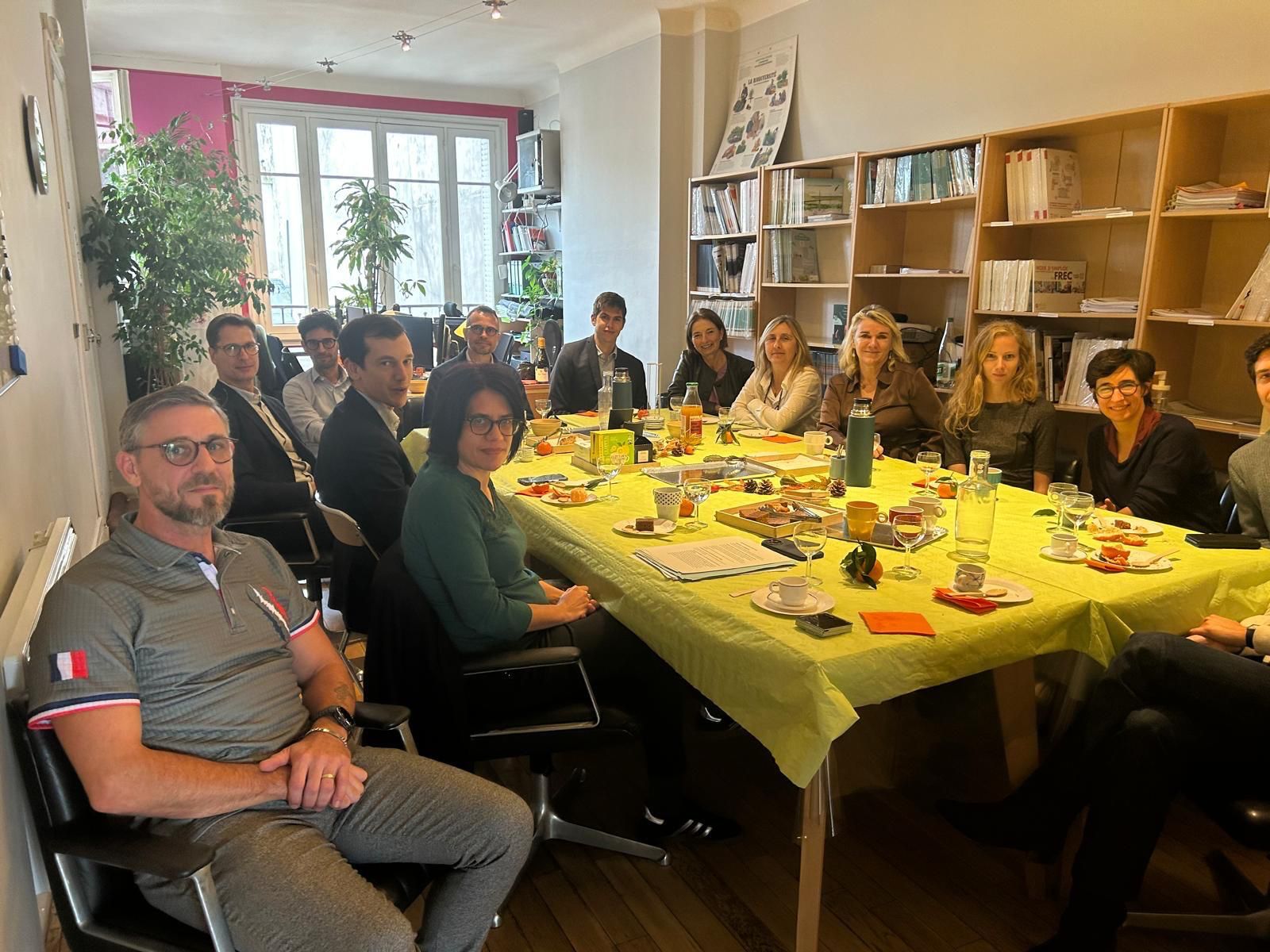
On 5 November 2025, I took part in a lunch meeting organised by the Orée Association, devoted to feedback on the IUCN World Conservation Congress in Abu Dhabi, with a particular focus on the implications for economic actors.
During the discussions, I presented the main lessons learned from the Abu Dhabi Congress (9–15 October 2025) and their significance for economic stakeholders. In particular, we examined Resolution 8.083, ‘Developing a circular and sustainable bioeconomy for sustainable food and agriculture’, which reiterates that circularity must be understood as a structuring attribute of the bioeconomy, and not simply as a waste management issue. It emphasises the importance of ecosystem-based adaptation and climate-resilient practices, recalling that ecological processes and biodiversity are key levers for maintaining ecosystem integrity while securing production. Discussions confirmed the growing interest in approaches combining circularity, sobriety and nature-based solutions.
We then addressed motion 8.078, ‘Regulating financing mechanisms based on biodiversity certificates and credits and ensuring positive effects on nature’, in a context where these instruments are gaining visibility but where integrity and reputational risks remain high. The text adopted in Abu Dhabi emphasises the need for robust and transparent assessments of biodiversity outcomes and highlights the importance of preventing speculation and ensuring multi-stakeholder governance with a clear separation of roles.
By linking the Congress motions to the operational expectations of economic actors, this exchange helped to strengthen the conditions for a credible commitment that is compatible with the conservation and restoration objectives promoted by the IUCN.


Comments are closed