On 11 December 2025, I had the opportunity to continue these discussions in the United Kingdom, in the field, alongside the London Wildlife Trust and The Wildlife Trusts, at Camley Street Natural Park, an urban nature reserve located a few minutes from King’s Cross. This site is a vivid illustration of the power of local nature when it is protected and valued as a shared heritage: a relatively small space on a metropolitan scale, but one that is capable of supporting rich biodiversity, serving as a refuge and corridor, and becoming a place of education.
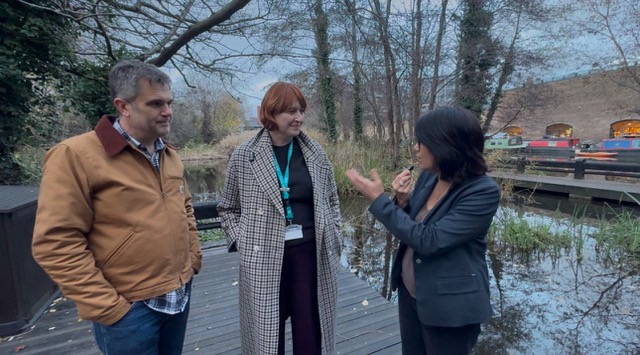
The reserve welcomes around 150,000 visitors a year and is home to species such as kingfishers and stag beetles, reminding us that nature does not need to be far away to be remarkable, and that its presence in the heart of the city can transform our relationship with the living world. Beyond the example of Camley Street, this exchange provided an opportunity to gauge the scale of the Wildlife Trusts’ capacity for action: a federation of 46 local organisations and a national structure, bringing together more than 944,000 members, more than 33,000 volunteers, and managing more than 2,600 nature reserves, ranging from small pockets of urban nature to vast coastal areas. Their strength lies in a model that combines land conservation, habitat restoration, participatory science, education, citizen engagement and advocacy, with a strategy that is particularly relevant in cities: bringing nature to where people live.


Comments are closed